Geneva, Switzerland, 24 March 2026- /African Media Agency (AMA)/- “There are various reasons for medication failure,” says Majaha Mtshali, tuberculosis (TB) focal person and staff nurse at Piggs Peak hospital in northwestern Eswatini. “When people do not take their medication correctly, whether by missing doses, taking it at the wrong times, receiving the wrong treatment, or stopping treatment early, there can be serious consequences.”
These serious consequences include drug resistance where the first-line treatment regimen no longer works. Multidrug-resistant TB (MDR-TB), a form of TB caused by bacteria resistant to at least two of the the two most powerful first-line TB medicines, is more complex and more expensive to treat. Just like drug-sensitive TB, it can also be easily transmitted through the air when a person with TB coughs, sneezes, sings or simply talks, especially in crowded or poorly ventilated settings.
This is what happened to 40-year-old Babazile Ngwenya from Manzini, Eswatini’s second largest city. When she first contracted TB in 2012, she took the first-line regimen but stopped after two months. She later developed MDR-TB, likely because of incomplete treatment, and was admitted into hospital for seven months to ensure adherence. However, this did not work. She remembers feeling “overwhelmed”.
“The drugs were too many, that’s why I was defaulting,” she says.
At this time, people with MDR-TB had to take treatment for up to 18 months, using a complex combination of daily oral and injectable medicines.
In 2022, World Health Organization (WHO) recommended a shorter six-month, all-oral regimen known as BPaL(M), making treatment simpler and easier for patients to complete. Eswatini adopted this new regimen in 2023. It is now standard treatment for patients diagnosed with MDR-TB.
“The shorter all-oral treatment regimen are preferable because they eliminate the need for painful daily injections, which can extend the treatment duration to up to 18 months, depending on the patient’s response,” says Mtshali.
When Ngwenya experienced persistent coughing, dizziness and shortness of breath in 2024 it was no surprise that she was diagnosed again with MDR-TB. “It was hard for me to admit I had TB again,” she says. She was admitted into hospital for three months because she also had anaemia and was administered the six-month BPaL(M) regimen. This time, she adhered to this easier treatment regimen and was cured.
Eswatini is one of the 30 high-burden TB countries globally. According to WHO estimates, Eswatini had a TB incidence of 319 per 100 000 population, including an estimated MDR-TB incidence of 13 per 100 000 population in 2024. “TB continues to be a major public health threat in the Kingdom of Eswatini. The situation is exacerbated by the HIV epidemic and rising rates of drug-resistant forms of TB, which are difficult to treat,” says Mduduzi Matsebula, Eswatini’s Minister of Health.
People diagnosed with MDR-TB are admitted to health facilities if they are very ill at the time of diagnosis or if their home environments do not allow adequate infection prevention and control. Discharge occurs once patients are stable and capable of continuing treatment at home.
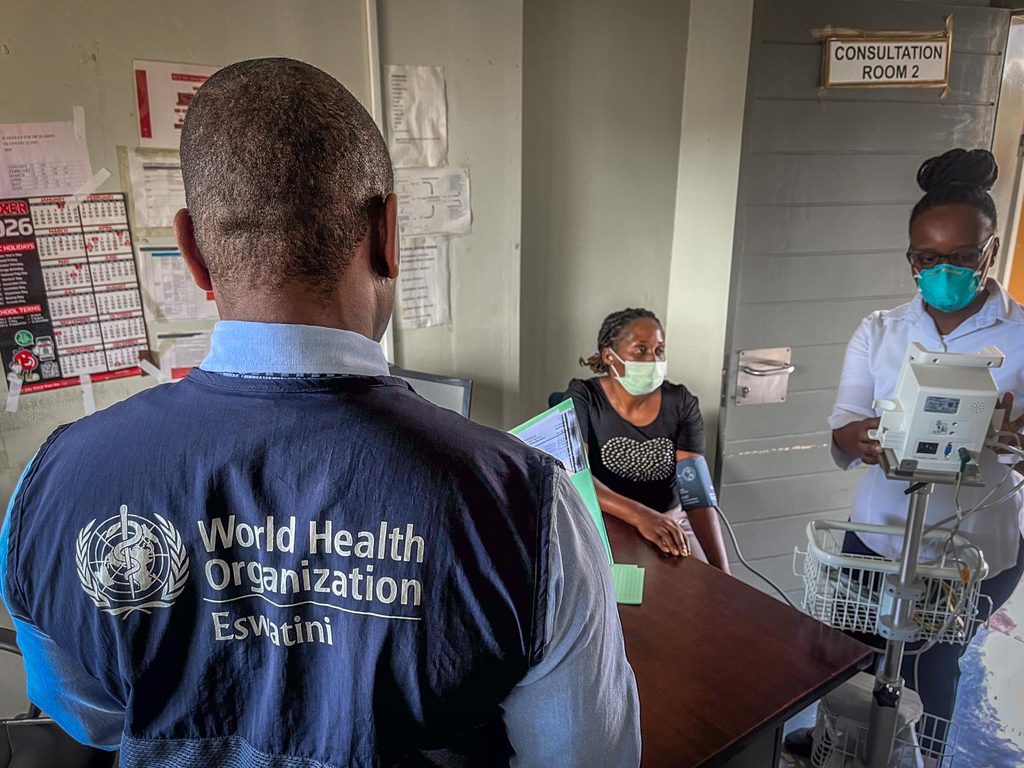
“Adherence to treatment begins with proper counselling,” says Mtshali. “At the initiation of treatment, a patient is educated on TB disease and the importance of adherence. For MDR-TB patients, having a treatment supporter is essential.”
A range of supportive measures help the patient to adhere to treatment. Patients and their treatment supporters receive a monthly transport stipend. Monthly food packages are also given to the patient which cover 4‒6 household members. The patient’s treatment supporter, usually a family member, is provided with a card that they mark each observed dose. If the patient misses an appointment, the health facility will make a follow up by calling them. If necessary, they will also send a dedicated treatment adherence supporter on a motorbike to the patient’s home to follow up.
For Ngwenya, her support system was her family and her colleagues. “I thank my mom for being there for me, showing me love and care when I was in the hospital. If it were not for her, I would not be here,” she says.
In Eswatini, 86% of people diagnosed with MDR-TB in 2022 were treated successfully and the number of TB deaths has declined by 60% between 2015 and 2024. However, as of 2024, an estimated 54% of people with MDR-TB were either not diagnosed or initiated on appropriate treatment. Addressing these challenges requires targeted screening and a high-level of community involvement, as well as improving referral systems and data management.
WHO continues to support the Eswatini’s National TB Control Programme. In 2024, the WHO helped develop the new TB national strategic plan 2024‒2028 and the rollout of digital X-rays systems with computer aided diagnostics to strengthen TB case finding. In addition, WHO provides ongoing technical support to improve the quality of TB services and strengthen programme management.
“WHO will continue to play a central role in supporting the country to accelerate the TB response, guided by the latest WHO TB guidelines,” says Dr Susan Tembo WHO Representative in Eswatini. “Strong collaboration with affected communities and civil society remains critical to ensuring equitable access to care.”
Ngwenya is back at her job as a sales assistant at a boutique in Manzini, one that she was forced to quit after falling ill. She is well and upbeat. “TB can be treated and cured as long as you go get checked and helped when you experience symptoms,” she points out.
Distributed by African Media Agency (AMA) on behalf of World Health Organisation.
The post Treatment of multidrug-resistant tuberculosis in Eswatini shows encouraging results appeared first on African Media Agency.