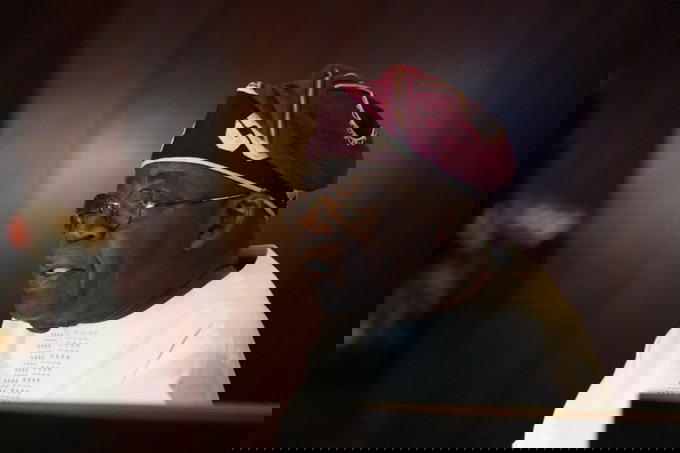
President Bola Ahmed Tinubu has signalled a broader overhaul of Nigeria’s petroleum governance framework following his executive order mandating direct remittance of oil and gas revenues into the Federation Account.
Presidency sources confirm that beyond the immediate fiscal reset, preparations are underway for a comprehensive review of the Petroleum Industry Act (PIA) to address structural and fiscal anomalies identified during implementation.
“This executive order is the first corrective layer,” a senior Aso Rock official said. “The President has made it clear that where structural defects undermine constitutional order or fiscal stability, they must be revisited.”
From Implementation Gaps to Structural Reform
Enacted in 2021, the PIA was hailed as a landmark reform to modernise Nigeria’s petroleum sector, improve governance and attract investment. However, presidency insiders say aspects of its revenue architecture — particularly around Production Sharing Contracts (PSCs) — produced unintended fiscal distortions.
Under post-PIA implementation, only 40 percent of PSC profit oil was remitted to the Federation Account. The remaining 60 percent was retained by the Nigerian National Petroleum Company Limited (NNPC), split between a 30 percent management fee and a 30 percent Frontier Exploration Fund. Financial records submitted to the Federation Account Allocation Committee (FAAC) in 2025 indicate that the affected revenue streams amount to about N14.57 trillion.
Presidency sources argue that such retention mechanisms created structural imbalance between the Federation and its national oil company.
“When the Federation receives less than half of a major revenue stream before deductions, questions naturally arise,” a presidency adviser noted. “The executive order corrects that imbalance pending legislative refinement.”
Constitutional concerns
Legal advisers within government say Sections 44(3) and 162 of the Constitution guided the President’s decision. Section 44(3) vests ownership and control of mineral resources in the Government of the Federation, while Section 162 mandates that all revenues accruing to the Federation be paid into the Federation Account.
“The sequencing matters,” an Aso Rock source explained. “Revenue must first enter the Federation Account. Any allocation or funding arrangement comes after.”
By invoking Section 5 of the Constitution, which vests executive authority in the President, Tinubu initiated immediate corrective measures while paving the way for legislative review.
Frontier Exploration Under Scrutiny
One area expected to feature prominently in the upcoming review is the Frontier Exploration Fund. The PIA allocated 30 percent of PSC profit oil to finance exploration in frontier basins outside the Niger Delta.
While presidency sources acknowledge the importance of reserve expansion, they argue that automatic deductions before remittance raised fiscal and constitutional concerns.
“Exploration is vital for long-term energy security,” a senior official said. “But funding mechanisms must align with public finance principles.”
Under the executive order, the 30 percent Frontier Exploration Fund retention has been scrapped, with future exploration financing expected to undergo transparent appropriation and legislative oversight.
Reasserting NNPC’s Commercial Identity
Another focus of the anticipated PIA review is the operational structure of NNPC. The executive order eliminated the automatic 30 percent management fee previously retained on PSC profit oil and profit gas.
Presidency insiders say this reinforces the company’s transition into a commercial entity rather than a quasi-fiscal authority.
“NNPC must operate as a business,” an adviser remarked. “It cannot retain sovereign revenue before the Federation receives its entitlement.”
Officials suggest the PIA review will clarify boundaries between corporate earnings and constitutional revenue flows.
Ending Dividend Substitution
The shift from direct oil sale proceeds to dividend-based inflows under post-PIA implementation also generated internal debate, presidency sources say. Reliance on dividend declarations created fiscal uncertainty.
“Dividends are not guaranteed,” one official said. “The Federation cannot substitute constitutional revenue with projected corporate payouts.”
The executive order restores direct remittance of royalty oil, tax oil, profit oil and profit gas into the Federation Account, effectively ending reliance on dividend substitution as a primary revenue channel.
Strengthening Fiscal Federalism
State and local governments, whose allocations depend on FAAC distributions, are expected to benefit from the reset.
“With full remittance, the Federation Account reflects true earnings,” an official familiar with FAAC proceedings explained. “That strengthens fiscal federalism.”
Presidency insiders argue that a comprehensive PIA review will further align petroleum governance with federal principles and enhance transparency across all tiers of government.
Oversight of Penalties and Funds
The executive order also mandates that gas flare penalties collected by the Nigerian Upstream Petroleum Regulatory Commission be paid directly into the Federation Account. In addition, expenditures from the Midstream and Downstream Gas Infrastructure Fund must comply with public procurement laws.
“These reforms address fragmented oversight,” a presidency source said. “The upcoming PIA review will consolidate these principles.”
Reform Through Dialogue
An implementation committee has been approved to oversee execution of the directive, while consultations with stakeholders and legislative leaders are expected as part of the review process.
“The President believes in reform through dialogue,” one official stated. “The objective is refinement, not disruption.”
Officials stress that the PIA’s core goals — investment attraction, governance modernisation and sector efficiency — remain intact.
“What we are correcting are structural weaknesses that emerged during implementation,” a senior aide clarified.
For the Tinubu administration, the executive order represents a strategic first step.
“Nigeria’s petroleum framework must be both modern and constitutional,” a senior presidency official concluded. “The executive order restores balance. The PIA review will entrench it.”
The post Tinubu sets stage for comprehensive PIA review after executive revenue reset appeared first on Vanguard News.