By Chimaobi Nwaiwu
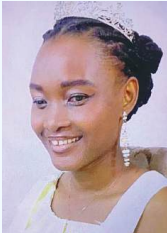
FOR 30-year-old, Chisom Lorita Nnonyelu, visual impairment is not the end of life. She strongly believes in the saying that there is ability in disability, and she strives to achieve that.
Even the death of her parents did not stop her from pursuing her vision and ambition. She simply determines to succeed.
She is a student of Nnamdi Azikiwe University Awka, Anambra State, pursuing a degree in Guidance and Counselling Department, Faculty of Education.
Despite her visual impairments, the indigene of Umuerum, Ayamelum Local Government Area of Anambra State, braced up to life challenges, pursuing education and engages in entrepreneurship. Her hard work and vision earned her an award in the university where she is known as Chisom, the face of visually impaired students of Nnamdi Azikiwe University, VISNAU, Awka.
To encourage other students with disability, Chisom organised a special empowerment programme with the theme: Out of sight is not out of vision, at the University Auditorum, which featured free medical outreach, skills acquisition, empowerment, her product launch and exhibition.
As a student, she is the Founder and Chief Executive of Lorit-C Events, a caterer and makes chin chin, peanuts and other things. She also produces liquid soap for cleaning.
She said she organised the programme to “promote inclusiveness, enhance academic success and also create awareness around the school environment for the benefit of the visually impaired students of Nnamdi Azikiwe University.
“We have two skills in the benefiting part. Some persons are going home with recorders, while some people are going home with training on cosmetology,” Chisom explained.
“My motivation is that as a visually impaired student, I have gone through a lot and if my colleagues can say what they have gone through, you will marvel. I believe that this programme will break barriers between us and those that like to discriminate against us.”
According to her, because of her condition, it was difficult for people to accept her products in the market.
“One of the challenges is that after showcasing my products, I still find it difficult to get the society to patronize me, just because I am visually impaired.
“The main reason I organised this programme is that there was a day I took my products to the market to sell, one person said: ‘“This is not the kind of product I will like to be using, your packaging is not good enough,” but I know it is because I am visually impaired, not because the products are not good or not well packaged. I know my products. And some of the people helping in sponsoring this kind of training are users of the products and they can confirm their qualities.
“I went to meet another person, she said she didn’t need the products, rather what she did was to give me N50; it was like she thought I came to beg. I said in my mind no, this cannot continue.
“Now I have to make this public for people to know that the fact that we do not have our sight again, does not mean that we do not have vision and ambition, it does not mean that we do not have anything to offer or give to the society. It does not mean that we are limited in any way. With this
programme, I believe that we are going to break barriers, because speakers will talk about discrimination, about people living with disabilities in the society and the rest of them.
“I am a caterer, I make chin chin, peanuts and other things, and I decorate. I also produce household cosmetology; my cosmetology products are called Clean Up. We make air fresher and others.”
She said it was not easy getting sponsorship for the training programmes and thanked those who responded to her call.
Lorita spoke glowingly about her course mates and her other friends in school. “My relationship with my course mates is wonderful, my fellow students have also been very nice to me, I am close to all of them, they don’t discriminate against me, and wherever I go, people seem to like me and associate with me.”
On a sad note, she said: “Unfortunately, my parents are late. I am doing all of these with the help of my younger siblings and sponsors. I am the first born of my family. I have six younger siblings. My mother died when I was 19 years and my father left when I was 24, they were ill. I just clocked 30 last November.
“My advice to other people in this condition or people with disability is that they should please try to encourage themselves first; try to make themselves important before the society will value them.
“Secondly I want to tell them not to be shy, they should not feel shy because of their conditions, nobody knows the best except God. No condition is permanent, so I believe that even though we are physically challenged today, we still have something that is going to lift us up tomorrow and can offer something positive to our society.”
Speakers at the event commended Chisom for her vision and doggedness and urged others with disability never to lose hope.
Dr. Elizabeth Anierobi in her paper: Education and you, living a full visual impairment, charged them: “Don’t allow another person to define you, you are here to acquire knowledge, the society is not fair to anyone, including those without disability. It is what you make out for yourself that matters.
“You have a role to play in training yourself. God has deposited skills in everyone of us. It is left for you to utilise what skill God has deposited in you like Chisom is doing. There are people who do not have the opportunity to be in school like you are now. Nobody is interested in your agony.
“Leave self pity, a lot of people will identify with you. We are differently able. Every person has a disability. We see differently”
The post Chisom, a visually impaired student of UNIZIK, Awka positively impacting lives of physically challenged appeared first on Vanguard News.