Kampala, Uganda, 23 February 2026 -/African Media Agency(AMA)/ – As Africa enters a decisive decade in the fight against malaria, a new generation of African scientists is shaping the future of malaria research, innovation, and public health leadership. They are driven by personal experience, community connection, and the urgent reality of a preventable disease that still claims hundreds of thousands of lives each year in Africa.
The latest WHO World Malaria report 2025 shows that global progress against malaria remains out of reach, with 282 million cases and 610,000 deaths in 2024 – approximately 9 million more cases than the previous year.
According to the 2025 Goalkeepers report, for the first time this century, child deaths are set to rise, and with a 20% decrease in health funding, it could result in 12 million more children dying by 2045.
These numbers show how quickly progress can be reversed without sustained investment.
Across research institutions, malaria scientists who are locally trained, globally connected, and motivated by scientific curiosity and social responsibility, are shaping the future of prevention in Africa.
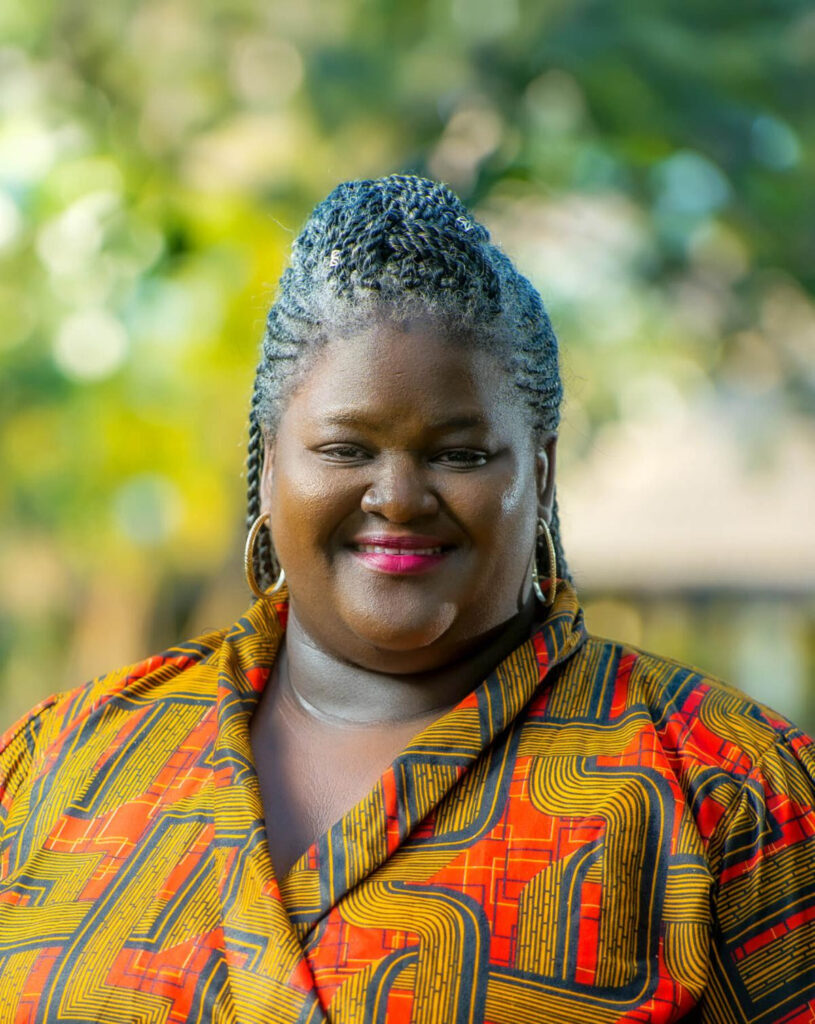
Krystal Birungi, Ugandan entomologist and malaria advocate
Krystal Birungi is a Ugandan entomologist and malaria advocate working with Target Malaria at the Uganda Virus Research Institute (UVRI). She holds a double major degree in Zoology and Botany from Makerere University and has worked with Target Malaria at UVRI for nearly a decade, contributing to research and outreach efforts focused on malaria prevention and community engagement.
Her advocacy extends beyond Uganda. In 2021, Birungi joined The Global Fund Advocates Network (GFAN) Speakers’ Bureau as a malaria champion, contributing to regional and global policy conversations on health equity and child survival. In 2025, she was named one of ten Goalkeepers Championsfor advancing equitable healthcare access across Africa and selected as an Obama Foundation Leader for Africa. That same year, she contributed an essay to ‘Hope for Life on Our Planet: Inspiration for Seven Generations’
“As a child, I survived malaria, and I watched my younger brother nearly lose his life to it. Those experiences never leave you,” she said. “They shape how you see the world and what you choose to dedicate your life to. For me, science became a way to protect other children and families from the fear mine went through.”
Today, Birungi engages communities in Uganda while contributing to global dialogue on malaria prevention, responsible innovation, and policy through cross-border collaboration.
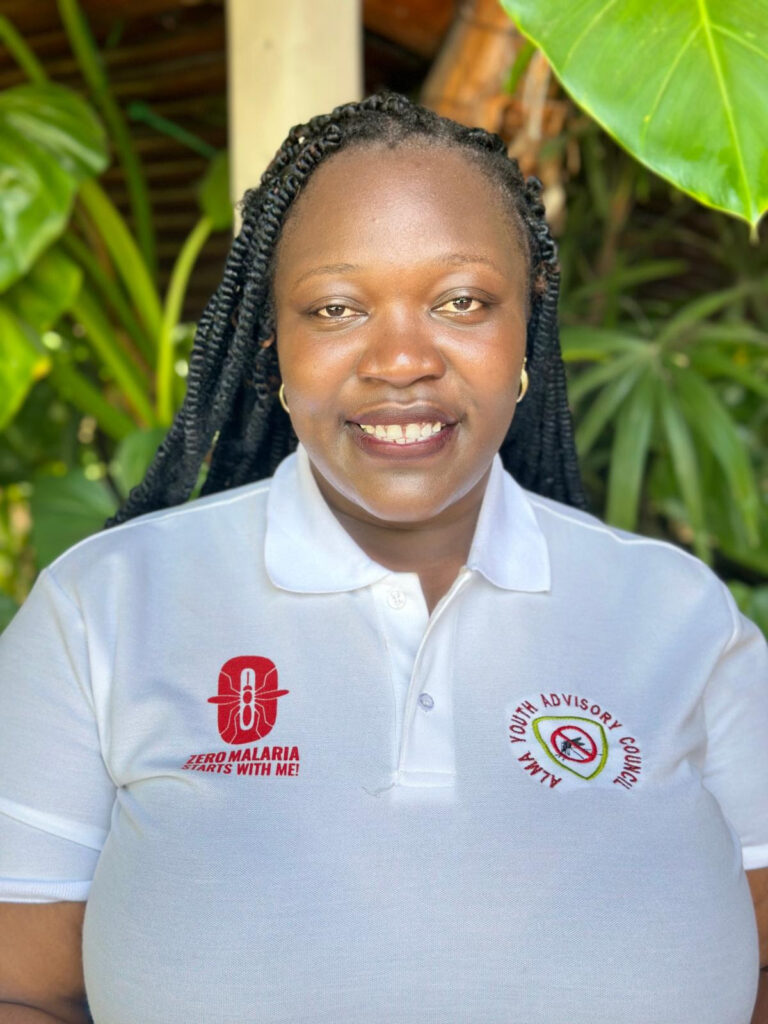
Dr. Annette Onyango, Kenyan medical doctor and global health and infectious disease ambassador
Dr. Annette Onyango is a Kenyan medical doctor with a special interest in global health and infectious diseases. In addition to her clinical practice, she actively supports grassroots malaria and Neglected Tropical Diseases (NTDs) prevention and control initiatives aimed at strengthening policy implementation.
Dr. Onyango serves as Secretary of the African Leaders Malaria Alliance (ALMA) Youth Advisory Council (AYAC). In this capacity, she is actively engaged in continental and regional health advocacy efforts focused on eliminating malaria by 2030. She advises ALMA on strategies to enhance meaningful youth participation in advocacy for malaria and NTD elimination at continental, regional, and national levels.
Furthermore, she supports advocacy, lobbying, and the mainstreaming of youth led malaria elimination initiatives across the continent, fostering stronger partnerships with governments, donors, civil society organisations, and other key stakeholders.
As a young doctor working in a national referral hospital located in a malaria endemic region, Dr. Onyango has witnessed firsthand the significant burden of vector-borne diseases. “The loss of a child or pregnant woman to a preventable disease is deeply distressing. I strongly believe that young people, who are most of the population, can serve as powerful agents of change when meaningfully engaged in community health programmes.”
Dr. Onyango’s work exemplifies how young health professionals can leverage their expertise to influence policymakers and mobilise fellow youth to prioritise the strengthening of health systems toward the elimination of vector borne diseases such as malaria.
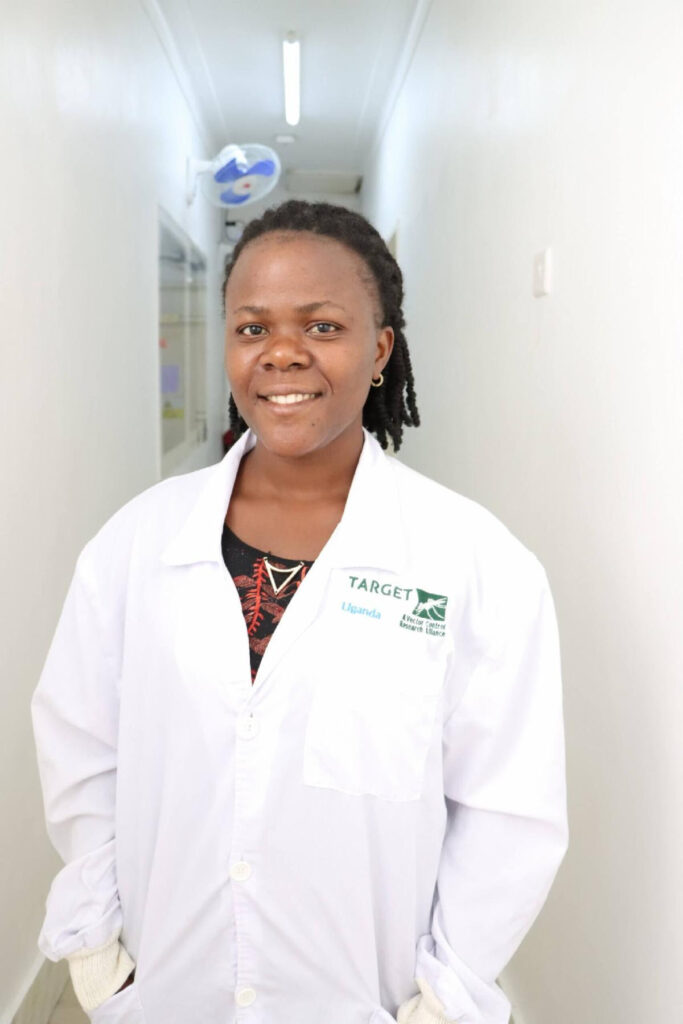
Angella Nakamaanya, young Ugandan voice in malaria science
Angella Nakamaanya is a Ugandan research assistant with Target Malaria at the Uganda Virus Research Institute (UVRI) in Entebbe. She is currently pursuing a bachelor’s degree in Zoology, developing a strong interest in mosquito biology and identifying knowledge gaps in vector care and maintenance research.
Her work reflects how a new generation of African scientists is entering the field with a commitment to ensuring research is shaped by the lived realities of affected communities and contributes directly to public health impact.
“Among my six siblings, I was the most frequently ill with malaria before the age of five,” she said. “That experience sparked my interest in understanding the biology and behaviour of malaria vectors as I progressed in life, and it continues to fuel my passion for malaria research.”
As an early-career scientist, Nakamaanya represents the future of African-led malaria research that is grounded in lived experience, scientific curiosity, and community relevance.
As 2026 begins, Africa’s malaria scientists are not waiting for change – they are defining it. From emerging researchers to established advocates, their work is empowering communities, shaping policy, and placing African leadership at the centre of a malaria-free future.
Distributed by African Media Agency (AMA) on behalf of Target Malaria
Notes to editors:
About Target Malaria:
Target Malaria is a not-for-profit research consortium that aims to develop and share new, cost-effective and sustainable genetic technologies to modify mosquitoes and reduce malaria transmission. Our vision is to contribute to a world free of malaria. We aim to achieve excellence in all areas of our work, creating a path for responsible research and development of genetic technologies, such as gene drive. www.targetmalaria.org
Target Malaria receives core funding by the Gates Foundation and Coefficient Giving (formerly Open Philanthropy). The lead grantee organisation is Imperial College London with partners in Africa, Europe and North America.
Follow Target Malaria on Facebook, X , LinkedIn and YouTube.
Follow Target Malaria Uganda on Facebook.
The post Africa’s next generation of malaria scientists takes action appeared first on African Media Agency.